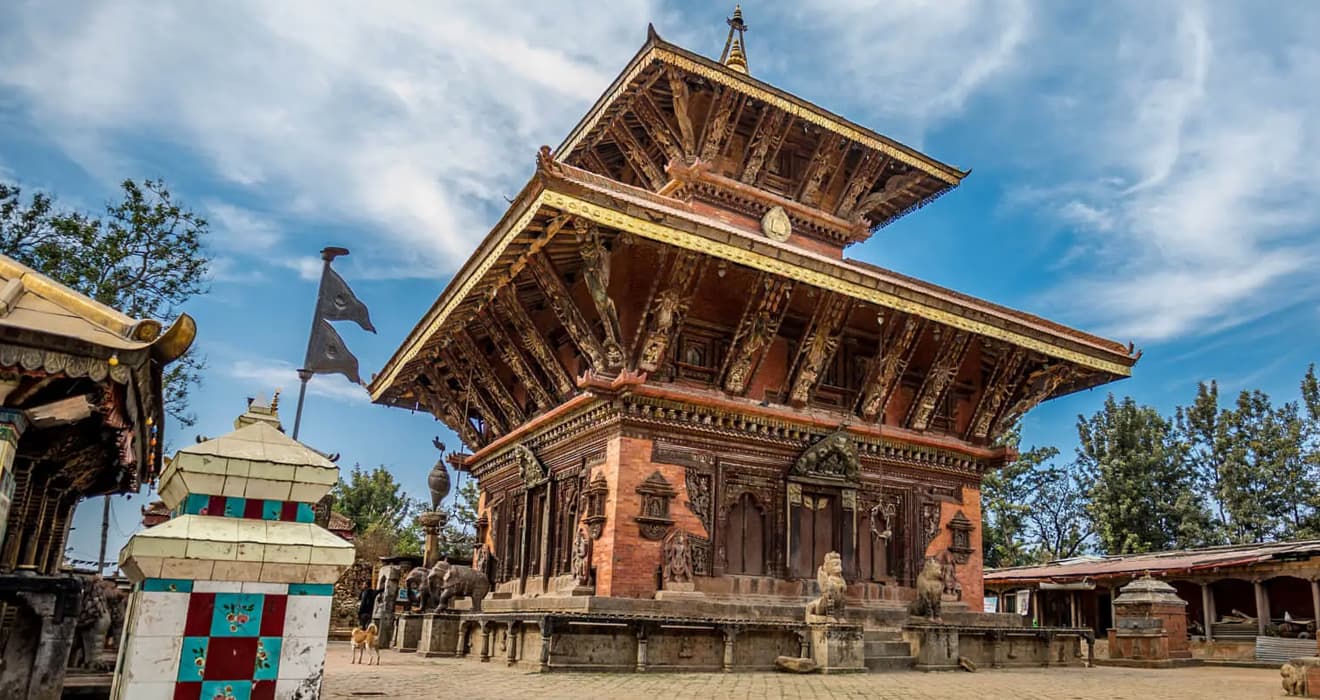
Changu Narayan Temple
The oldest temple in Nepal — Newari pagoda, Licchavi stone, and a ridgeline view over the Kathmandu Valley.
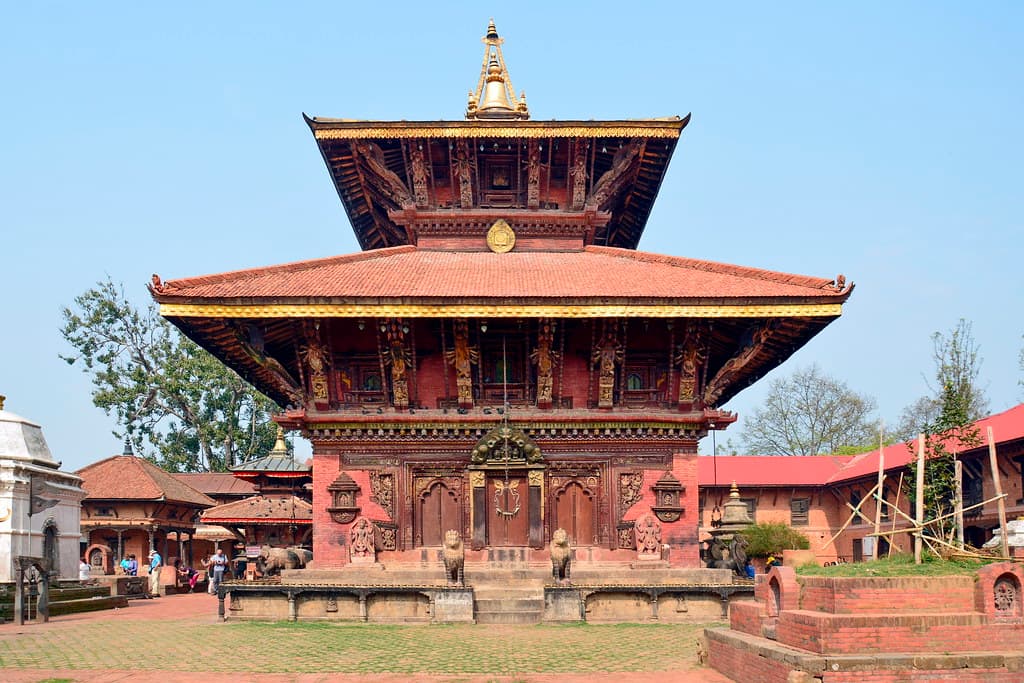
Another perspective
Changu Narayan temple is the oldest temple in Nepal, and it is a UNESCO World Heritage site located 6 kilometers north of Bhaktapur. The temple is perched on the western tip of a long ridgeline that rises several hundred meters above the Manohara River floodplain, offering a stunning view of the Kathmandu valley. The temple is a historical and artistic marvel that holds immense significance in the Kathmandu Valley. Its awe-inspiring architectural design and intricate wood and stone carvings make it a treasure trove of cultural heritage.
From the Licchavi era
History
The temple's establishment is commonly attributed to the reign of King Hari Datta Verma of the Licchavi dynasty in 325 AD, as this period is regarded as one of the most culturally significant eras in Nepal's history. The stone pillars found near the main entrance are believed to have been erected during the reign of King Manadeva around 464 AD and are believed to contain the oldest written text in Nepal. These pillars bear inscriptions detailing Manadeva's military accomplishments and other stories of the time.
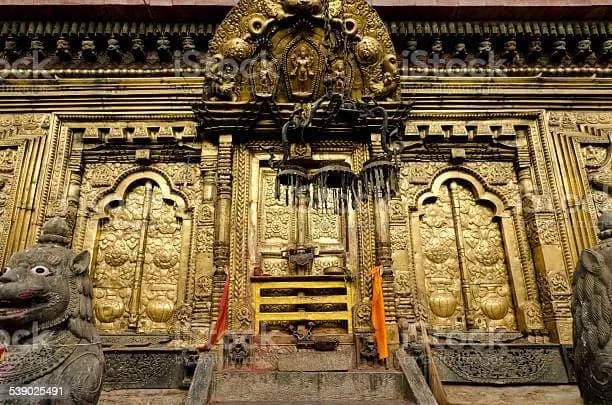
Shrines & courtyards
Temple structure
Changu Narayan's impressive towering architecture commands attention with its unique Newari style, which differs from the commonly seen Shikhara and Pagoda styles of temples in the Kathmandu Valley, according to experts in sociology and anthropology. The temple contains artworks from the fourth, ninth, and thirteenth centuries, most of which are Newar art: work from the Newar people, an Indigenous Indo-Aryan group primarily from the Kathmandu Valley.
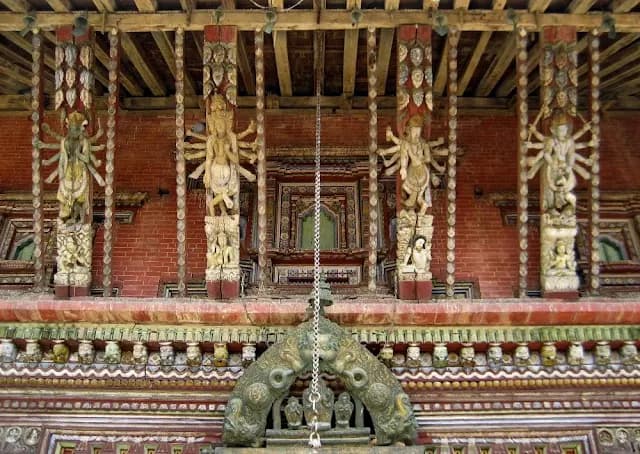
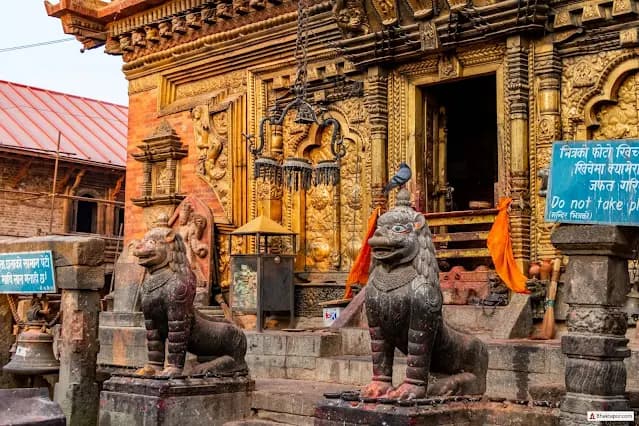
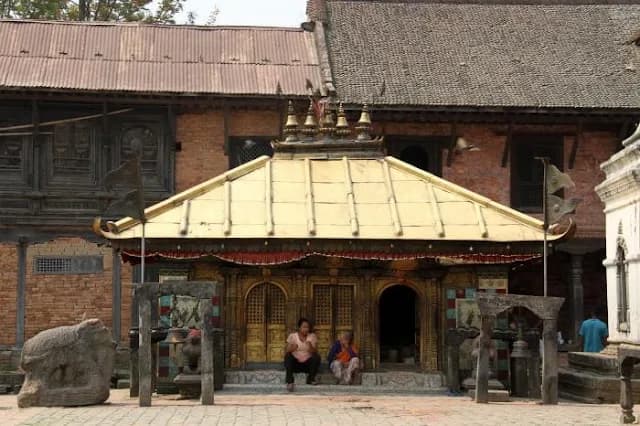
The temple has a central shrine with four gates, each guarded by animal gargoyles. The western gate is the main one, protected by Garuda. Inside, there is a meticulously carved idol of Vishnu Narayan as the Preserver of the Universe, with four symbols of Vishnu. The temple's exteriors showcase ten avatars of Vishnu in authentic Newari style around the courtyard, including Narsimha, Vikaranta, and other incarnations. Notably, the temple features a 1,500-year-old stone carving of Vishnu with ten heads and arms, a rarity among Hindu temples. Other shrines in the complex include Chhinnamasta, Kileshwor, Ashta Matrika, and a small shrine for King Bhupatindra Malla and his queen Bhuvanlaxmi. The shrine is guarded by mythical beasts and has intricate carvings of Tantric deities on its roof stalk.
The Champak tree
Legend
Long ago, a cow herder obtained a cow known for producing large amounts of milk from a Brahmin named Sudarshan. While grazing in the forest, the cow would always go to the shade of a specific Champak tree, and a boy would come out and drink its milk. However, when the cow was milked at home, only a small amount of milk was produced. After observing this, the cow herder contacted Sudarshan, and they both discovered the boy drinking the milk from the tree. Believing the boy to be a devil, they cut down the tree, causing fresh human blood to spill out. Lord Vishnu then emerged from the tree, explaining that he had been living there anonymously, surviving on stolen milk because of a past crime. He was beheaded when the tree was cut down, freeing him from his sins. The two men established a temple in Lord Vishnu's name at the site, which has been sacred ever since.
Newar heritage
People & culture
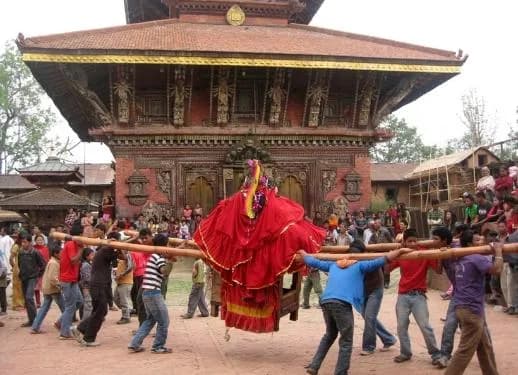
The Changu Narayan temple vicinity is renowned for its affluent Newari culture, known for its exceptional artistic talent, and is a focal point for Newari crafts such as woodcarving and brasswork. Newars practice both Hinduism and Buddhism, which evolved from a blend of Indo-Aryan and Tibeto-Burman cultures. They speak "Nepal Bhasa," which has roots in Tibeto-Burman languages but is significantly influenced by Indo-Aryan languages. They have distinctive customs and rituals that are followed from birth to death, and unique practices for festival celebrations, weddings, and funerals. The area also provides an opportunity to savor authentic local cuisine, characterized by its distinct flavors and local ingredients. Various cultural events and festivals are held throughout the year, offering visitors a glimpse into the vibrant Newari culture.