Bhaktapur & Nagarkot Day Trip from Kathmandu
The two most visited places near Kathmandu happen to be in the same direction. Here's the itinerary that actually works.
Why Nagarkot first, always
Nagarkot is best at dawn (Himalayan sunrise). Bhaktapur is best from 9am–3pm — open markets, potters working, morning light on the temples.
Nagarkot is further east (32km). Bhaktapur is on the way back (13km). Doing them in reverse means driving past Bhaktapur twice.
The 30-minute drive from Nagarkot down to Bhaktapur passes through quiet village roads — a natural transition between landscape and city.
The sunrise + Bhaktapur itinerary
Hotel pickup from Kathmandu
Private car collects you from your hotel — Thamel, Patan, Boudha, or Lazimpat. The guide rides with you. The 90-minute pre-dawn drive east is part of the experience.
Arrive Nagarkot — walk to viewpoint
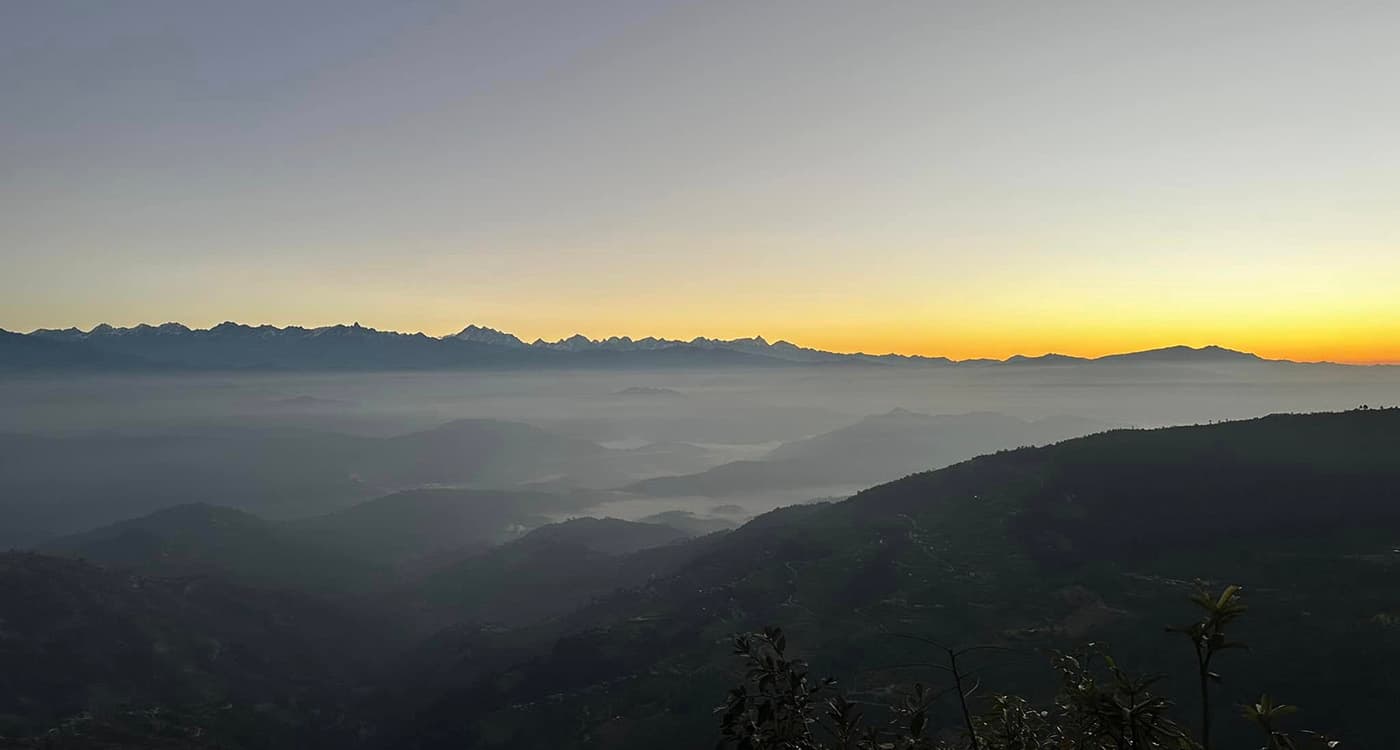
Arrive at 2,175m before dawn. A 5-minute walk from the car park brings you to the viewpoint. Position yourself facing northeast. The sky will already be changing.
Sunrise over the Himalayas
Everest at 176km northeast, Lhotse, Makalu, Kanchenjunga, Langtang, Manaslu. The 10 minutes before the sun clears the ridge are often the best light — the snowcaps go from grey to orange to gold. October and November give the highest probability of a clear morning.
Breakfast with the mountain view
Dal bhat or eggs at the viewpoint restaurant, with the Himalayan panorama still visible. The clouds usually start building in the valley below by 8am, so you're eating above them.
Drive to Bhaktapur (30 minutes)
Nagarkot to Bhaktapur via quiet village roads — a different Nepal from the highway. Terraced fields, brick houses, and the Kathmandu Valley gradually appearing below you as you descend.
Bhaktapur — 4 hours in the old city
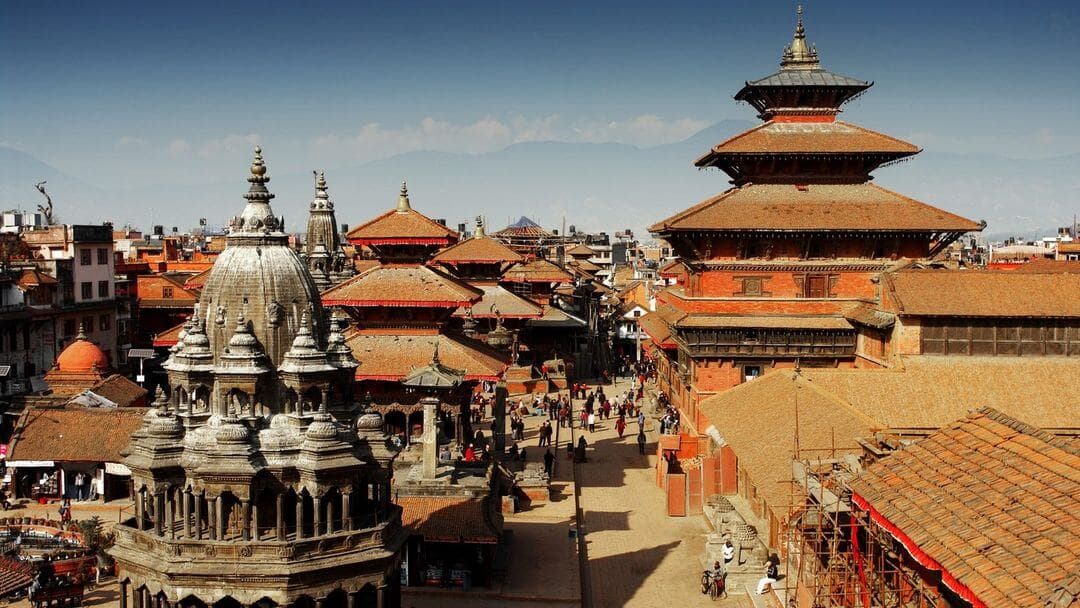
Enter at the western gate (NPR 1,800 entry fee for foreigners). The guide navigates: Durbar Square with the 55-Window Palace and Golden Gate, Taumadhi and Nyatapola Temple, the Peacock Window at Dattatreya, Pottery Square. Eat Juju Dhau (King Curd) before you leave.
Newari lunch in the old city
Lunch at a local restaurant inside the walls — not the tourist spots on the square perimeter. The guide knows where.
Return to Kathmandu
45-minute drive back. Drop-off at your hotel or anywhere in central Kathmandu.
Alternative — afternoon & sunset version (no 4am start)
If the 4am start isn't for you: leave Kathmandu at 8am, spend the morning in Bhaktapur (morning light on the temples is excellent), drive to Nagarkot by 3pm, and watch the sunset from the ridge. This version requires an overnight in Nagarkot.
The trade-off: afternoon clouds often build in the valley from 11am. Himalayan views are clearer at sunrise than sunset — particularly for Everest, which sits directly east. Sunset is still beautiful, but mountain visibility is less reliable.
For the overnight version, stay in Nagarkot, wake for sunrise the next morning, then return to Kathmandu. That's a 2-day, 1-night trip — more comfortable and worth it if your schedule allows.
What to prioritise at each stop
Bhaktapur
9:30am – 2:00pm
Prioritise: Durbar Square → Taumadhi + Nyatapola → Juju Dhau (King Curd) → Pottery Square
Skip if time-pressed: Dattatreya Square (15-min walk each way — worth it with 5+ hours)
Don't miss: Eating inside the old city walls, not at the tourist restaurants on the square perimeter
Nagarkot
5:45am – 9:00am
The viewpoint: 5-minute walk from the car park. No hiking needed.
Peaks visible: Everest (176km NE), Lhotse, Makalu, Kanchenjunga, Langtang, Manaslu, Ganesh Himal
Best months: October and November — highest probability of a clear morning
Practical details
Transport
Private car is the only practical option for the sunrise itinerary — no public buses run to Nagarkot at 4am. DIY taxi for the full day: NPR 2,500–4,000.
Entry fee
Bhaktapur entry: NPR 1,800 (foreigners), NPR 500 (SAARC/Chinese nationals), free for Nepali citizens and children under 10. Paid at the western gate.
What to bring
Warm layer for Nagarkot dawn (cold at 2,175m even in October). Comfortable walking shoes for Bhaktapur cobblestones. Cash in NPR for entry fee and food.
Common questions
Can I do Bhaktapur and Nagarkot in one day without a guide?
Technically yes, but it requires planning. For the sunrise version you need a taxi or driver departing Kathmandu by 4:30am — no public buses run to Nagarkot at that hour. You'll also need to navigate finding the Bhaktapur ticket counter, arranging transport between Nagarkot and Bhaktapur (30 minutes by private vehicle), and getting back to Kathmandu. A guide makes the logistics disappear and adds real context to both places.
How much does a Bhaktapur Nagarkot day trip cost?
DIY with a hired taxi for the full day: NPR 2,500–4,000 for the car alone, plus Bhaktapur entry fee (NPR 1,800 for foreigners) and food. Guided private tour from Outdoor Nagarkot: from NPR 5,500 (~$65 per person), which includes the private car, guide, and breakfast at Nagarkot with the Everest view.
Is it worth doing both Bhaktapur and Nagarkot in one day?
Yes — they complement each other well. Nagarkot is pure landscape (high altitude, Himalayan horizon, open ridge). Bhaktapur is pure culture (medieval city, temples, potters, Juju Dhau). Neither overlaps. The only trade-off is that you spend less time at each than if you visited separately. If you have two days, split them. If you only have one day in the Kathmandu Valley, the combined sunrise + old city itinerary is the best use of that day.
What is the best time of year for this day trip?
October and November are the best months. Post-monsoon skies are clear, the probability of a visible Himalayan sunrise from Nagarkot is highest (80%+ on clear mornings in October), and Bhaktapur is at its most atmospheric — warm days, sharp light, and the city is busy without being overwhelming. March to May (spring) is the second-best window. Avoid July and August (monsoon — Nagarkot views are usually clouded over).
How early do I need to leave Kathmandu for Nagarkot sunrise?
Leave by 4:00–4:30am for a sunrise around 6:00–6:30am (varies by month — earlier in spring, later in winter). The drive from Kathmandu to Nagarkot takes 90 minutes. You want to arrive at the viewpoint at least 20 minutes before sunrise to get positioned and let your eyes adjust. Cutting it close means missing the best light — the 10 minutes before the sun clears the ridge are often better than the sunrise itself.