At a glance
The Kathmandu Valley was once a lake. Geologists and ancient texts agree on this. A vast body of water sat between the mountains, with no outlet. Then, according to legend, a great sage struck the gorge at Chobar with his sword — the rock split, the water drained south into the Bagmati River, and what remained was a floor of black silt so deep and fertile that almost anything could grow in it. The mountains were already there. The valley was now ready.
The name "Nepal" carries this origin inside it. Ne means water. Pa means people. Nepal: the people who came to live where the water had been. A civilization that begins with a drained lake.
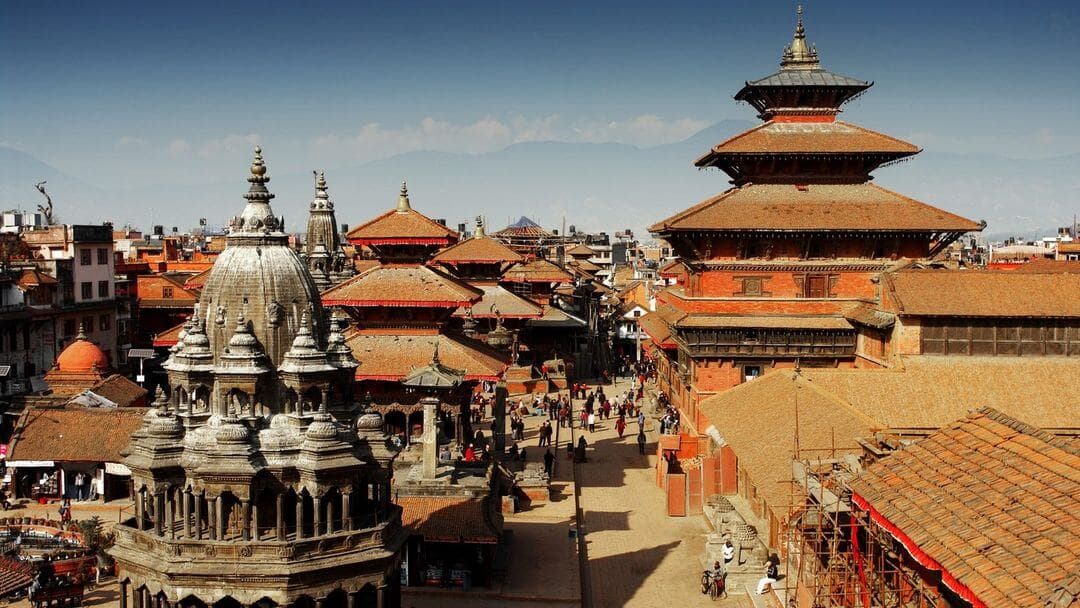
When the valley floor dried, people settled it. Over centuries, three cities grew — Kathmandu, Patan, and Bhaktapur. Of the three, Bhaktapur is the oldest. It was the seat of the Malla kings before the kingdom split into three rival courts. It was here, in the narrow brick streets of the Newari old town, that the traditions of art, craft, architecture, and spiritual knowledge were built and refined over more than a thousand years.
The woodcarvers who raised the 55-Window Palace passed their tools to their sons. The potters of Pottery Square have been throwing clay on kick-wheels in the same open square for centuries. Juju Dhau — the king's curd, richer and sweeter than any yogurt made elsewhere — has never left Bhaktapur. The tantric deities enshrined in its temples have been worshipped continuously, the rituals unbroken even through earthquake, conquest, and time. The festivals stop traffic and pull the whole community into the streets, exactly as they always have.
Most ancient cities are ruins. Bhaktapur is not. People live in the same brick houses built five hundred years ago. The streets are narrow because life here still moves at the pace of a person walking. It is not a reconstruction or a preserved display. It is a city that simply kept going.
This is a living museum — except the people inside it are not actors. Welcome to Bhaktapur.
Medieval squares
The Four Squares of Bhaktapur
Bhaktapur is not a single square — it is a network of four interconnected medieval squares, each with its own character and monuments, connected by lanes of brick and stone that have changed little in five centuries.
Durbar Square — The Palace Heart
The historic royal courtyard is anchored by the 55-Window Palace (Pachpanna Jhyale Durbar) — a 15th-century Malla palace whose facade of elaborately carved peacock windows is the most photographed image in Bhaktapur. Each window is different. The craftsmanship took generations.
The Golden Gate (Sun Dhoka) is the gilded entrance to the palace courtyard. Cast in 1753 under King Ranjit Malla, the gate is considered the finest example of repousse metalwork in Nepal — deities, mythical creatures, and a towering Garuda fill every centimetre. The Vatsala Temple nearby once held the great stone bell whose ringing woke the palace.
Taumadhi Square — Nyatapola's Domain
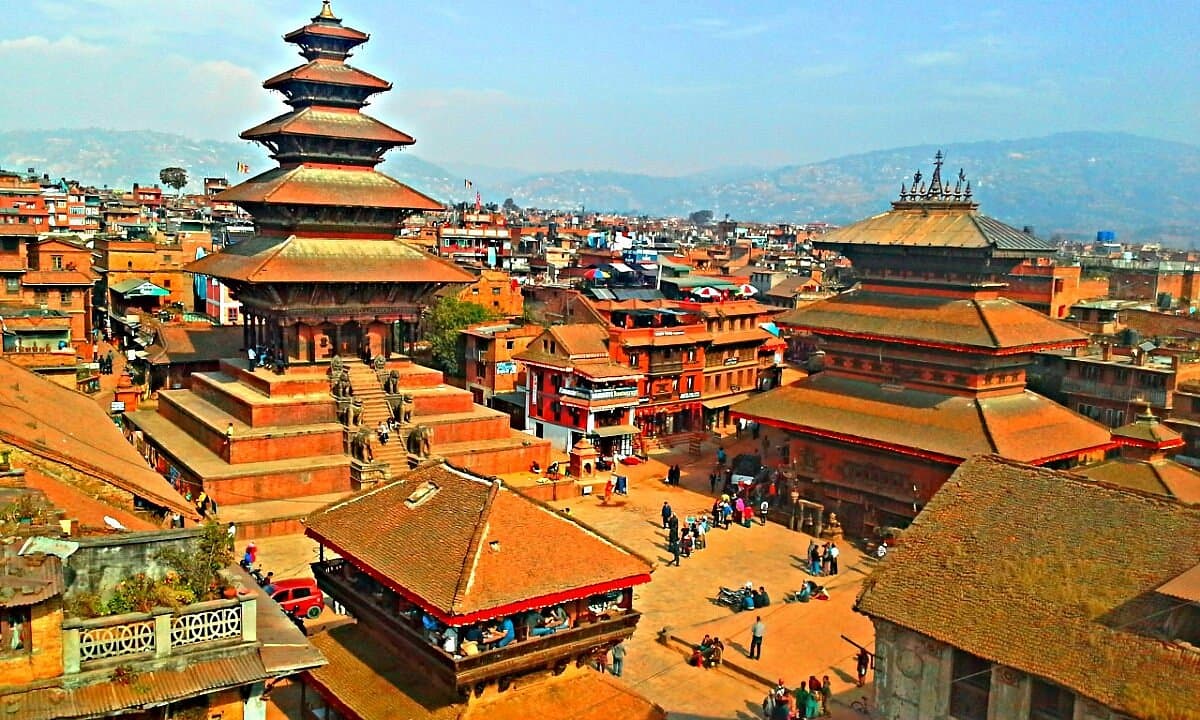
The Nyatapola Temple, built in 1702 under King Bhupatindra Malla, is the tallest pagoda in Nepal at 30 metres. Its five tiers rise with mathematical precision, each level guarded by a pair of figures — wrestlers, elephants, lions, griffins, and minor goddesses — each ten times stronger than the one below. The goddess inside has never been publicly revealed.
Directly facing it across the square is the Bhairavnath Temple, dedicated to the fearsome form of Shiva. The visual tension between the two temples — one serene and soaring, one squat and wrathful — has defined this square for over three centuries.
Dattatreya Square & the Peacock Window
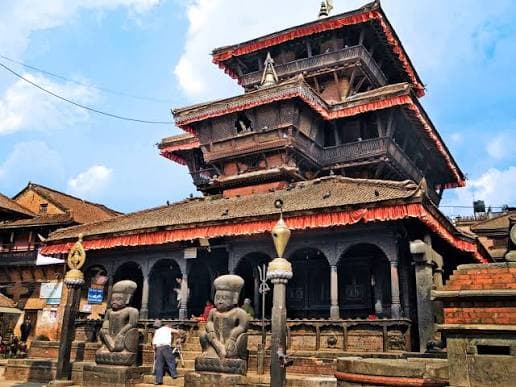
The eastern end of the old city holds the Dattatreya Temple, which predates everything in Durbar Square — parts of it are believed to be from the 12th century, built from the timber of a single tree. The temple serves a rare triform deity combining Brahma, Vishnu, and Shiva.
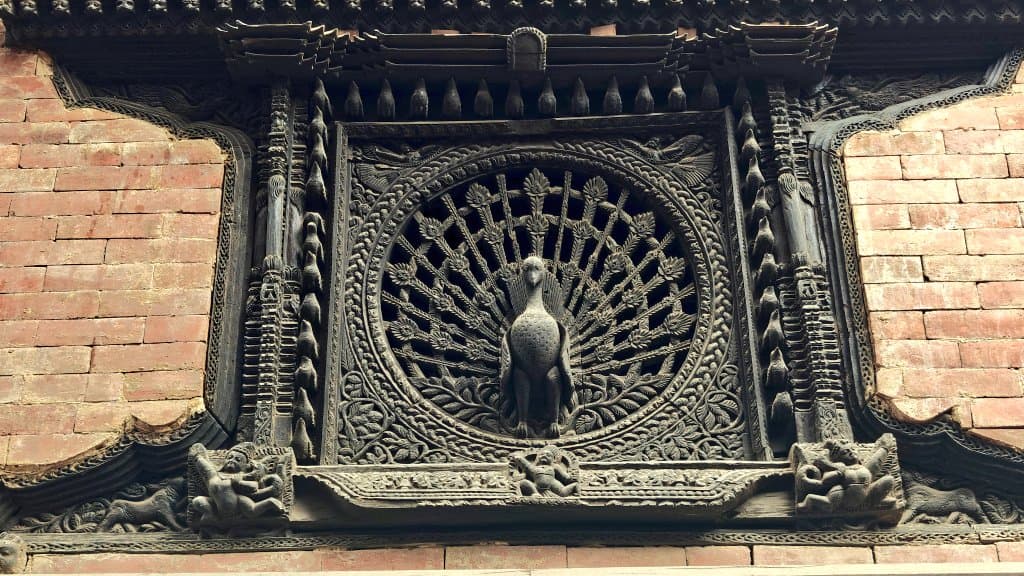
A two-minute walk away, set into the wall of the Pujari Math (a priest's house), is the Peacock Window. Carved in the 15th century, it is one of the finest pieces of wood carving in the world — a peacock with an outstretched tail surrounded by serpents, deities, and floral patterns, all cut from a single frame. Most visitors walk past it without noticing.
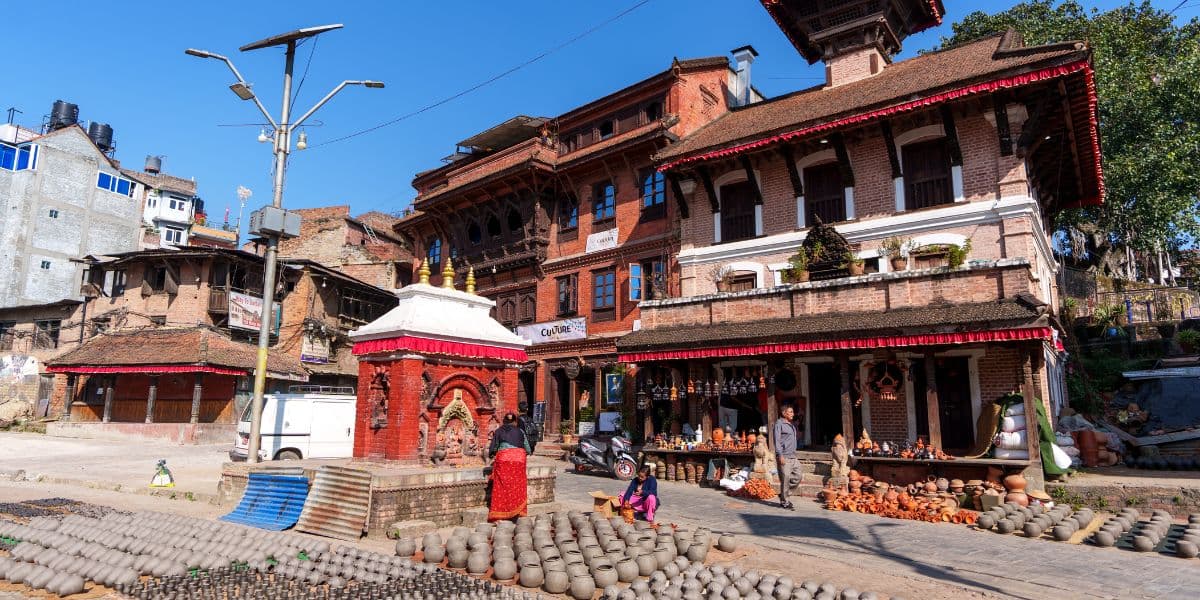
Pottery Square (Bolachhen) — Living Craft
Pottery Square is the most tactile part of Bhaktapur. Dozens of potters from the Prajapati caste work traditional kick-wheels in an open courtyard, surrounded by hundreds of clay pots drying in rows in the sun. The craft is passed from parent to child and has been practiced here for centuries.
You can watch or pay for a short session at the wheel — NPR 200–400 gets you 15–20 minutes of hands-on instruction. Most people are worse at it than they expect, which is part of the appeal. The square is free to enter and sits just off the main route between Taumadhi and Dattatreya squares.
Tickets & access
Entry Fees & Tickets
| Visitor category | Entry fee |
|---|---|
| Foreign nationals | NPR 1,800 (18 USD) |
| SAARC & Chinese nationals | NPR 500 |
| Nepali citizens | Free |
| Children under 10 | Free |
Multi-day tip: If you are staying overnight in Bhaktapur, take your passport to the ticket counter and ask for a free extension stamp. Your single ticket becomes valid for multiple days — this is an official provision, not a workaround.
Logistics
How to Get to Bhaktapur from Kathmandu
Local bus
From Kalanki or Ratna Park bus parks. Around NPR 30. Journey 1–1.5 hrs depending on traffic. Frequent departures throughout the day.
Taxi / ride-share
NPR 800–1,200 one-way from Thamel. Pathao and InDrive apps give fixed fares. Journey 30–45 min without traffic.
Private car with guide
Best option for a guided visit — pick up and drop back at your hotel, flexible timing, guide provides context. Included in the Nagarkot + Bhaktapur day tour.
Newari food
What to Eat in Bhaktapur
Juju Dhau
The king's curd — set yogurt made only in Bhaktapur, served in unglazed clay pots. Sweeter and richer than standard dahi. Sold from shops near Taumadhi Square. Eating it from the pot while sitting on a temple step is the correct approach.
Juju Dhau guideBara
Thick lentil pancakes fried on cast-iron griddles in the lanes off Taumadhi Square. Usually eaten with achar (pickle) and egg on top. Best in the morning when the batter is fresh.
Samay Baji
The traditional Newari snack platter: beaten rice (chiura), dried meat (sukuti), black soybeans, egg, ginger, and chilli. Historically eaten at festivals — several restaurants in Bhaktapur serve it as a sit-down meal.
Plan your visit
Suggested Itineraries
Half-Day (3–4 hours)
Ticket gate → Durbar Square → Golden Gate → 55-Window Palace → walk east to Taumadhi Square → Nyatapola Temple → Bhairavnath Temple → Juju Dhau from a nearby shop → return. Covers the essential highlights at a comfortable pace.
Full Day (7–8 hours)
Half-day route above + continue east to Dattatreya Square → Peacock Window → Pottery Square session → lunch at a rooftop restaurant overlooking Taumadhi → second walk through Durbar Square in afternoon light → exit via the western gate. The light on the 55-Window Palace is best between 3–5pm.
Nagarkot Sunrise + Bhaktapur Combo
4:30am hotel pickup in Kathmandu → 90-min drive to Nagarkot (2,175m) → watch Himalayan sunrise including Everest → breakfast with mountain view → drive to Bhaktapur by 9am → full Bhaktapur day → return to Kathmandu by 6pm. This is the most efficient way to see both places in a single day.
See the tour detailsDeeper guides
Entry Fee Guide
Full breakdown — foreigners, SAARC, groups, multi-day extension.
Nyatapola Temple
History, symbolism, and the five guardian tiers.
Things to Do
10 things to do in Bhaktapur — beyond the main squares.
Juju Dhau
The king's curd — what it is, how it's made, where to eat it.
Getting There
Bus, taxi, Pathao, InDrive — costs and travel times.
Bhaktapur & Nagarkot Day Trip
Combining both in one day — logistics and timing.
Frequently asked questions
Is Bhaktapur worth visiting?
Yes — Bhaktapur is widely considered the best-preserved medieval city in Nepal and one of the finest in all of Asia. Unlike Kathmandu Durbar Square, which is surrounded by modern traffic and commercial sprawl, Bhaktapur's old city retains its original brick-paved lanes, temple courtyards, and working craft quarters. The 55-Window Palace, Nyatapola Temple, and Pottery Square alone justify the trip. Most visitors who allow a full day consider it the highlight of their Kathmandu Valley itinerary.
How much time do you need in Bhaktapur?
A half-day (3–4 hours) covers the main highlights: Durbar Square, the Golden Gate, Taumadhi Square, and Nyatapola Temple. A full day (6–8 hours) lets you walk all four squares at a relaxed pace — including Dattatreya Square and the Peacock Window — eat a proper Newari lunch, and try a pottery session. If you're combining Bhaktapur with a Nagarkot sunrise, you'll arrive by 9am and have a natural full day before returning to Kathmandu by evening.
Is Bhaktapur better than Patan Durbar Square?
They serve different purposes. Patan (Lalitpur) has exceptional museum-quality bronze and stone sculptures in a compact area, and its Durbar Square is more walkable for a 2-hour visit. Bhaktapur is larger, less commercialised, and feels more like a living city rather than a heritage showcase. The Nyatapola Temple in Bhaktapur has no equivalent in Patan. If you have time for only one, Bhaktapur gives the more complete experience of medieval Newar urban life.
Can you visit Bhaktapur without a guide?
Yes, the city is walkable without a guide — the four squares are connected by a logical route and most landmarks are signposted. That said, a local guide adds real value: the meaning of the carvings on Nyatapola's five tiers, the hierarchy of deities on the Golden Gate, the story behind the Peacock Window's craftsman. Two to three hours with a knowledgeable guide saves you from walking past things that look decorative but are actually 500-year-old theological programmes in stone and wood.
What is the best time of year to visit Bhaktapur?
October and November are the best months — post-monsoon skies are clear, the city is dry, and the light in the late morning hits the brick and gilded facades perfectly. March and April are the second-best window, with warmer weather and fewer crowds than peak autumn. Avoid July and August (heavy monsoon, streets can flood) and December–February (cold mornings, occasional fog). The Bisket Jatra festival in April (Nepali New Year) brings extraordinary energy but also large crowds.
What is the entry fee for Bhaktapur Durbar Square?
The official entry fee set by Nepal Tourism Board is NPR 1,800 (approximately US$18) for foreign nationals. SAARC nationals (India, Bangladesh, Pakistan, Sri Lanka, Bhutan, Maldives) and Chinese nationals pay NPR 500. Children under 10 enter free. The ticket covers the entire old city, not just one courtyard — and if you are staying overnight in Bhaktapur, you can get a free multi-day stamp extension at the ticket counter by showing your passport.