[IMAGE REQUIRED: Juju Dhau in traditional clay pot, Bhaktapur]
Juju Dhau — Bhaktapur's King Curd
Set in earthenware, served slightly sweet, made fresh each morning. The curd that Bhaktapur has made the same way for centuries.
The basics
What Is Juju Dhau?
"Juju Dhau" translates directly as "king curd" in Newari — juju meaning king, dhau meaning curd or yogurt. It is a set yogurt made from buffalo milk, distinctly thicker and richer than the standard curd served across Nepal. Buffalo milk has significantly higher fat content than cow's milk, and this richness is central to what makes the result different.
The clay pot it sets in is not just a container — it is part of the process. Unglazed earthenware is porous: it slowly draws excess moisture from the curd as it sets, concentrating the flavour and producing a density that would be impossible to achieve in a sealed vessel. The finished curd is firm enough that the pot can be tilted without the curd moving.
A small amount of sugar or condensed milk is added before setting — this is what gives Juju Dhau its characteristic mild sweetness, which distinguishes it from the sharply sour yogurts of South Asia. It is served at room temperature or slightly cool. Always in the same small reddish-brown earthenware pot it set in.
Juju Dhau holds a Geographic Indication (GI) tag — a legal designation protecting it as a product specifically of Bhaktapur. Attempts to replicate it in Kathmandu or elsewhere have consistently produced something different: same recipe, different result. The combination of local culture, water, clay, and the specific microenvironment of Bhaktapur's dairy workshops is what makes it what it is.
The process
How It's Made
Boil and cool the buffalo milk
Fresh buffalo milk is brought to a full boil, then cooled to approximately 43°C — warm enough that the culture will activate, not so hot that it will be killed. Temperature is traditionally judged by touch.
Add the culture
A small amount of culture starter — often a spoonful of the previous batch — is stirred in. The culture is not a commercial packet; it is passed from batch to batch within the same dairy, some of which have maintained continuous cultures for generations.
Pour into unglazed clay pots
The inoculated milk is poured into individual earthenware pots. The pots are not glazed — this is essential. The porosity allows slow moisture evaporation during setting, which concentrates the curd and gives it its characteristic density.
Set near warmth for 6–8 hours
The pots are placed in a warm room, traditionally near a clay oven, for 6–8 hours. During this time the culture ferments the milk into curd. The temperature and environment of the setting room affect the final flavour — one reason Bhaktapur's version is hard to replicate elsewhere.
Serve the same day
Juju Dhau has no preservatives and is not packaged for transport. It is sold and eaten the same day it is made. Morning batches are the freshest — afternoon pots have been sitting longer since setting.
In the city
Where to Find the Best Juju Dhau
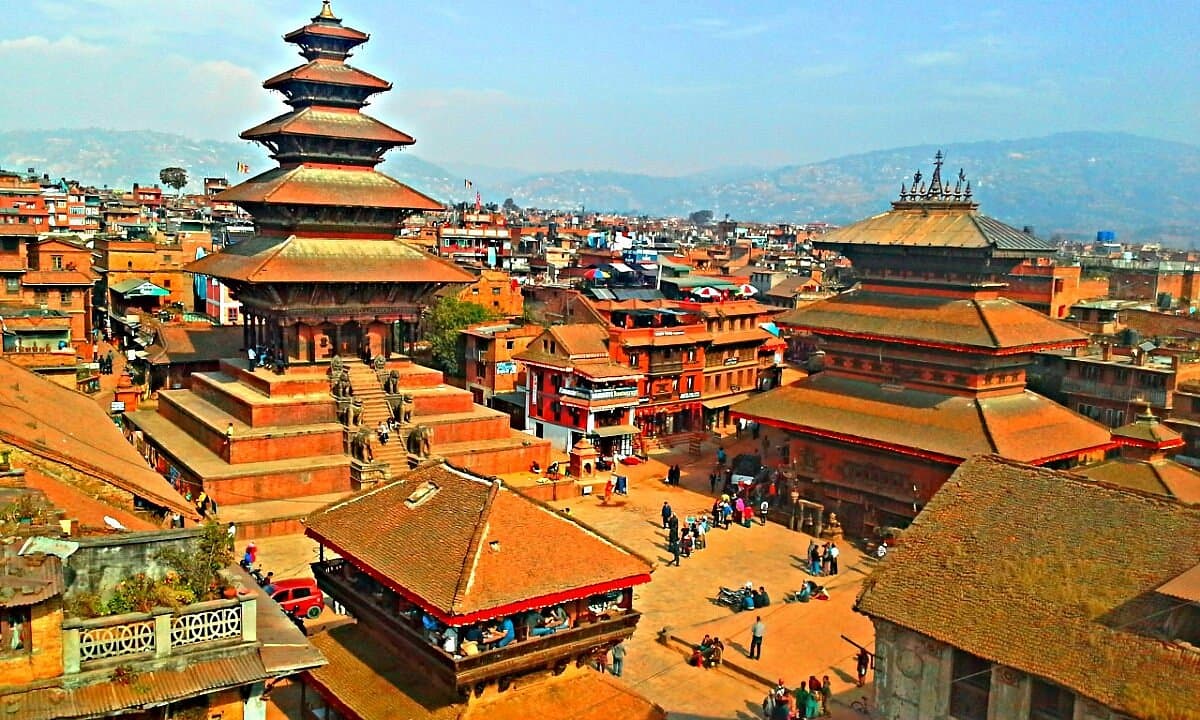
The highest concentration of Juju Dhau vendors is around Taumadhi Square, the second of Bhaktapur's four squares as you walk east from the main Durbar Square. Look for stacks of small reddish-brown clay pots arranged outside small shops and street stalls. If you can smell the slightly warm, slightly sweet scent of fresh curd from the street, you have found the right place.
The Pottery Square area (Bolachhen) — about a ten-minute walk further east — also has sellers, some of whom are both curd-makers and pottery workshops.
Go in the morning if you can. Batches are set overnight and sold from around 8am. By early afternoon many stalls have sold out or are down to the last pots from that morning. Prices are NPR 80–150 per pot depending on size — a small pot is enough for one person as a snack.
Why It Doesn't Leave Bhaktapur
The clay pot is not packaging — it is part of the product. Its porosity is what makes the curd firm. In a sealed plastic container, the moisture cannot escape, and the curd softens to the consistency of regular yogurt within hours. The flavour also changes: without the slow evaporation, the lactic sharpness is not absorbed and the balance shifts.
The culture used in Bhaktapur's workshops is maintained locally and has adapted to the specific conditions of the city — the water composition, the ambient temperature of the dairy rooms, the particular clay of local pots. Tested attempts to reproduce Juju Dhau in Kathmandu have consistently produced a different result even using the same recipe and culture.
This is the reason Juju Dhau holds a Geographic Indication (GI) tag, the same legal protection framework that covers Darjeeling tea, Champagne, or Roquefort cheese. The designation confirms that Bhaktapur Juju Dhau as a product cannot meaningfully exist outside Bhaktapur.
What to Eat It With
Most visitors eat Juju Dhau on its own — as a mid-morning snack or post-lunch dessert, sitting on the steps of Taumadhi Square with Nyatapola Temple in front of them. The simplest way is also the most satisfying: eat it in the pot with the wooden spatula or spoon the vendor provides, in the place where it was made.
In Newari tradition, Juju Dhau is part of the Samay Baji platter — the ceremonial platter served at festivals, weddings, and rituals that includes beaten rice (chiura), dried fish, boiled egg, soybeans, and ginger. The curd provides a cooling, sweet counterpoint to the other elements.
It is a fixture at Bhaktapur's major festivals — Bisket Jatra (the Newari New Year in April), Indra Jatra, and weddings. During these events, large orders of Juju Dhau are made for communal feasting, and the dairies run at full capacity.
Common questions
Is Juju Dhau vegetarian?
Yes. Juju Dhau is made from buffalo milk, a culture starter, and a small amount of sugar. No animal rennet or meat products are used. It is suitable for lacto-vegetarians. It is not vegan as it is a dairy product.
Can I bring Juju Dhau back to Kathmandu?
It is possible but the texture changes within a few hours. Juju Dhau is made fresh each morning and is best eaten the same day in Bhaktapur. The unglazed clay pot is part of the setting process — it absorbs excess moisture and keeps the curd firm. In a sealed container or bag, the moisture cannot escape and the curd softens. Most people who try to transport it are disappointed by the result.
What does Juju Dhau taste like?
It is thicker and richer than regular yogurt — the buffalo milk gives it a higher fat content that makes it dense and creamy. It is mildly sweet (from added sugar or condensed milk during preparation). The flavour is clean, slightly tangy from the fermentation, with a hint of earthiness from the clay pot. It is less sour than Greek yogurt and far thicker than commercial yogurt.
Is Juju Dhau safe to eat?
Yes — it is a traditional fermented dairy product that has been made and consumed in Bhaktapur for centuries. The fermentation process preserves the curd. Buy from established vendors near Taumadhi Square or Pottery Square. Freshness is the key indicator: the curd should be firm and smell clean. Avoid any pot that smells sour beyond the normal tangy note of yogurt.