Best Time to Visit Nagarkot
Month-by-month conditions for hiking, mountain views, and weather at 2,175m.
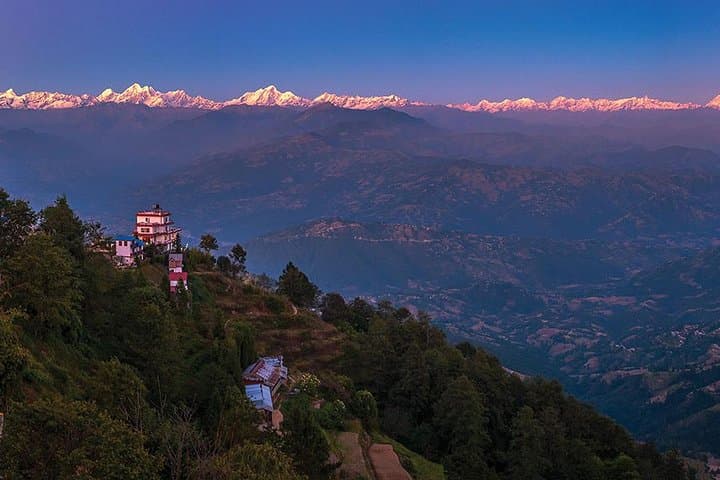
October and November are the best months to visit Nagarkot. The monsoon ends by early October, skies clear completely by mid-month, and temperatures stay comfortable at 10–22°C. All major Himalayan peaks — including Everest at 176km — are visible from the 2,175m ridge. Spring (March–April) is the second-best window, with similar mountain visibility and warmer days.
Month-by-month conditions
| Month | High | Low | Visibility | Trails | Verdict |
|---|---|---|---|---|---|
| January | 10°C | 1°C | Good | Dry | Cold but clear |
| February | 12°C | 2°C | Good | Dry | Early spring |
| March | 17°C | 7°C | Very Good | Excellent | Top pick |
| April | 20°C | 10°C | Good | Excellent | Great |
| May | 23°C | 14°C | Fair | Good | Pre-monsoon |
| June | 22°C | 16°C | Poor | Slippery | Skip |
| July | 22°C | 17°C | Very Poor | Wet | Skip |
| August | 22°C | 17°C | Very Poor | Wet | Skip |
| September | 22°C | 16°C | Poor → Fair | Drying | Skip |
| October | 20°C | 10°C | Excellent | Excellent | Top pick |
| November | 16°C | 4°C | Best | Perfect | #1 |
| December | 11°C | 1°C | Good | Dry | Quiet & cold |
Autumn — October & November
The post-monsoon season is the best window of the year. October opens with some monsoon tail — occasional afternoon showers and cloud cover on the range in early mornings. By mid-October, it clears. November has zero rain and the driest, clearest atmosphere of the year — the Himalayan range looks closer than any other season.
October days sit at 17–22°C, comfortable for full-day hiking without overheating. November cools to 10–18°C days and 2–6°C nights — still good hiking weather, but pack a proper down jacket for pre-dawn starts.
Spring — March & April
The second-best season. March and April bring warmer temperatures (17–20°C days), rhododendrons flowering along the trail margins, and mountain visibility that rivals October — though not quite November. Days are longer, which makes full-day hikes more manageable.
By late April, a slight spring haze starts building in the atmosphere — visibility is still good but not as crisp as post-monsoon autumn. May gets warm and the pre-monsoon haze thickens. If spring is your window, aim for March or early April.
Winter — December to February
Cold but genuinely beautiful. Days run 8–12°C — manageable for hiking if you dress properly — and nights drop to 0–3°C. Mountain views are good, not spectacular. The atmosphere is drier than spring, so visibility is often better than you'd expect for winter.
This is the quietest period — very few tourists, lower rates, and the trails to yourself. If you want Nagarkot without the crowds and don't mind cold mornings, December and January are genuinely worth considering. Snow at 2,175m is rare but possible in late January and February at higher elevation sections of trail.
Monsoon — June to September
The Himalayan range disappears behind monsoon cloud from mid-June through September. Mountain views are essentially gone — you might get a brief morning glimpse in early June before the monsoon fully establishes, but count on nothing. Trails get slippery, especially forest sections where leeches appear.
That said: the hillsides are extraordinarily green, the terraced farms are in full operation, and Nagarkot sees almost no tourists. If you're coming for the culture and local life rather than Himalayan views, the monsoon is a completely different kind of experience. A few travellers prefer it specifically for the quiet. Just don't come for the mountains — they won't be there.
Common questions
What is the best month to visit Nagarkot?
November is the single best month — zero rain, the clearest skies of the year, and all major Himalayan peaks visible. October is a close second, with excellent conditions from mid-month. March and April are the best spring months, with similar mountain clarity and warmer temperatures.
Can you see Everest from Nagarkot?
Yes, on a clear morning between October and March. Everest (8,848m) is visible at 176km to the northeast from the panoramic trail ridge. The 6���9am window gives the best views before valley haze builds. November is the most reliable month — roughly 9 out of 10 mornings are clear.
What is the weather like in Nagarkot in winter?
December through February is cold but clear. Daytime temperatures run 8–12°C, nights drop to 0–3°C, and snow is possible at higher elevations though rare at Nagarkot's 2,175m. Mountain views are good — not quite as sharp as November but far better than summer. It's the quietest period of the year.
Is Nagarkot worth visiting during the monsoon?
Mountain views are gone from June through August — cloud cover blocks the Himalayas almost completely, and the trails get slippery with leeches on forest sections. That said, the hillsides turn vivid green, the terraced farms are active, and there are almost no other tourists. If you don't care about mountain views and want a quiet, lush landscape, the monsoon has its own appeal.
How many days do you need in Nagarkot?
One full day and one overnight is enough to do the panoramic hiking trail and catch a sunrise or sunset. Two full days lets you add a second trail — either the village walk or the Changu Narayan descent. For the Nagarkot–Dhulikhel ridge walk or the Chisapani overnight trek, plan for at least two days.
Is Nagarkot cold in October?
Days are warm — 17–22°C and comfortable for hiking in a T-shirt from 10am onwards. Nights cool to 8–12°C, so a mid-layer fleece handles evenings and early morning starts. It's not cold enough to need a down jacket in October — that's more of a November requirement.
What is the best time of day to see mountains from Nagarkot?
Early morning — ideally before 7am and no later than 9am. The Himalayan range is clearest in the first two hours after sunrise before valley haze builds. Afternoon light (4–5:30pm) is also good for photography as the low sun catches the snowcaps, but the range is often partially obscured by mid-afternoon cloud.
Is spring or autumn better for hiking in Nagarkot?
Autumn (October–November) is slightly better for mountain visibility — the post-monsoon atmosphere is drier and clearer than spring. Spring (March–April) is warmer, with rhododendrons flowering along the trail and longer daylight hours. Both are excellent. If your main goal is seeing Himalayan peaks, go in autumn. If you want a greener, warmer hike, spring works well.
Plan the details
Can you see Everest from Nagarkot?
Honest visibility odds by month, best viewpoints, peak identification.
Things to do in Nagarkot
12 activities with links to full guides — hikes, cooking, sunrise watching.
Panoramic hiking trail
The 6km loop with the best mountain views — the route most people come for.
Getting to Nagarkot
Bus, taxi, and private car options from Kathmandu.
Nagarkot sunrise tour
Private guided sunrise tour from Kathmandu — 4am pickup, Himalayan views, breakfast.
Nagarkot day hike
Full-day guided hike — three trail options from Nagarkot.